


First taste of Tokyo
- georgiaphillips210
- May 26, 2025
- 10 min read
Tokyo in my head was overwhelming. It was a populous dressed in outlandish otherworldly fashion; it was inescapable flashing neon signs plastered over every building; it was robot cafes and vending machines; it was people, people everywhere, every street an anxiety inducing crush of people; it was the future.
Of course Tokyo wasn't really like that, well not all of it anyhow.
The coach from Kawaguchiko dropped us of to Shinjuku station, the busiest train station not only in Japan but worldwide. The train and metro sections of the station certainly lived up to that reputation, a labyrinth-like series of tunnels leading to 14 different lines that services over three and a half million people every day. In contrast, the coach portion of the station was practically empty, the people wandering around the bays barely in the tens, far from the thousands below. Nearby to the coach stops we found an information centre that doubled as a luggage drop, handy as our unmanned hotel wouldn't let us in until 4pm.
With a few hours to kill we headed to Sushiro, interested to see what differences the big city would bring to our favourite chain restaurant. The only discernible change was obvious, instead of a small tablet to order from our booth had a giant touchscreen. It quickly became quite obvious this wasn't the upgrade we'd imagined. The screen quickly became annoying, it's constant animations were distracting and the games we could play (albeit all in Japanese) often took over the menu we trying to look through. The sushi, as always, was still a hit.
Dark rain clouds had filled the sky while we were tucked away glutting on sushi, so our plan to wander the nearby gardens were put on hold. Instead, we filled in the rest of our pre check-in time with a brief stint of shopping. I'm not overly into clothes shopping, however one particular brand had caught our attention. Uniqlo, is a Japanese brand that focuses on well made wardrobe stables at affordable price points, while also focusing on sustainability. Although their shops can be found worldwide, online rumour insists that the shops in Japan are superior in price and quality. The shop, as you might imagine from its location in the heart of Tokyo, was packed with people making hunting for the perfect finds slightly daunting but we managed it, coming away with a few pieces to add to our wardrobes.
When the time rolled round we headed back to Shinjuku station to pick up our bags before braving its underground depths to try and find our train. We stayed at "Luana Shibuya," an unmanned hotel located in a peaceful neighbourhood, which despite its name was not actually close to Shibuya at all. To get their we needed to ride the "keio new line" (a line which was located in a far away part of Shinjuku station that never seemed to get easier to find) and ride just a few stops to Hatagaya. The area couldn't have been further from the Tokyo of my imagination. Neon signs were conspicuously absent, the area just centred round a normal high-street filled with izakayas and shops. The buildings while well kept, were not futuristic feats of engineering but regular homes and businesses. It was an oasis of calm away from the hustle and bustle of the touristy parts of the city - we loved it.
The locals however, did not love us.
Well not us specifically, but they seemed against the idea of tourists invading their peaceful suburb. We didn't realise when we booked, however while we were looking over where we'd chosen to stay most of the negative comments were due to hostility from locals towards the hotel guests. Saying this, our visit was thankfully free of strife.

Rather than head back into the city proper, that evening we chose to dine at Han. The building itself was unassuming, a traditional wooden facade with white paper menus (all in Japanese) stuck haphazardly onto it. We ducked under the stark white noren and slid open the door. The inside was cozy, small tables ran down one side of the restaurant with the kitchen and counter seats taking up the rest of the space. There was only one table occupied inside and from the way they interacted with the staff throughout their meal it was clear that they were locals: always a good sign.
Ordering was a novel experience, Han didn't have an English menu, in fact it didn't have a traditional menu (as we would see it) at all. Instead, white sheets of paper covered the walls, each a one a different dish - quite a common method historically across Japan. After much scanning with our translation app, and a few amusing mistranslations later, we made our choices: the tuna sashimi for me with a side of fried aubergine and daikon, the fish set menu for Ben. My tuna was so good, some of the best i'd tried : fresh, delicate and super flavourful but it couldn't compete with the perfectly cooked salmon that Ben was presented with. In the end our meal came to a hefty ¥7200 (£35) a little expensive comparatively to what we'd been paying but well worth every penny.


Nestled within a large woodland next to Tokyo's bustling centre is Meiji Jingu Shrine, a shinto shrine commemorating Emperor Meiji and Empress Shokun. As far a shinto shrines go, this one was a fairly new addition to Tokyo being just over a century old. It's also one of Japan's most frequented shrines. As we walked along the tree lined avenues of the park it didn't seem that busy, but that soon changed the nearer to the shrine we got. Looking through the shrines large ornamental gateway we observed a sea of bobbing umbrellas filling up the space in the inner courtyard. Like us, everyone was determined that the drizzly weather wasn't going to stop them enjoying their exploration of Tokyo's imperial shrine. The most important (and aesthetic) area of the shrine was off limits for photography, and where the various signs posted along its raised viewing platform failed to impress this upon those visiting, an officious man armed with a whistle and hawk like mannerisms was there to remind them (causing the shrines soundtrack to be less peaceful than expected).
On the way out of the park we happened across the Meiji Gardens. Although we hadn't heard of them before, after seeing the rather reasonable ¥500 entry fee we decided to give it a shot. The gardens were traditionally Japanese and included a teahouse, pond, well and iris garden. The informational booklet provided on entry explained how the garden was formerly practice paddy fields, where the children of Tokyo's resident Samurai would labour, so they might learn the work of the classes underneath them and not take it for granted.
Exiting the garden we arrived at the largest wooden torii gate in Japan, a clear boundary between the parks tranquility and the vibrance of Harajuku, one of Tokyo's most outlandish districts.


Harajuku was exactly how i'd imagined, shops filled with quirky and goth fashions, flashing screens, weird and wonderful cafes - all being explored by an insane amount of people. It wasn't a place for leisurely window shopping, once we joined the river of humanity flowing down its main street we were swept along and practically spat out at its other end, slightly confused and overwhelmed. We'd spied some places of interest along the way and geared ourselves up for a second pass. This time (with a bit more determination) we exited the throng halfway down the main highstreet at the brazenly named "Strawberry Fetish": a desert shop specialising in the viral sensation that is Strawberry candy. Originally a Chinese treat called "Tanghulu" - strawberry candy is a deceptively simple desert of strawberries coated in a thin layer of crystallised sugar. I admit I was drawn to it due to its popularity online, but much to my surprise it was actually good - not so good I could manage more than one stick but way better than expected.
Feeling my ability to tolerate crowds quickly waning, we decided to leave the other online recommendations in Harajuku for another time and made our way to the also viral "I'm Donut?" in Shibuya instead. Famous for fluffy, chewy doughnuts in a range of classic and slightly bizarre flavours, the doughnut shop also features an ever present queue trailing from its door. Not to be put off, we joined its end and soon enough we were in the shop itself.
The inside of the shop wasn't what i'd imagined, a single path snaked around the shops small dark interior. The queue inside slowly shuffled along, grabbing doughnuts along the way before quickly arriving at the cash register. With no room to back track, and feeling like we had to keep moving led us to make some snap decisions for the fear of missing out - or the shame of having to rejoin the queue outside. We left with three doughnuts - a classic glazed (rather good), a matcha, red bean and warabi (slightly bizarre), and a raspberry cream (the obvious winner).




As we were in the area, we wandered our way along to the infamous Shibuya Scramble: the world's busiest pedestrian crossing to see what all the fuss was about. Perhaps we'd arrived during a lull, or maybe it was due to inherit Japanese politeness and efficiency but the crossing was far less daunting than i'd pictured. I had imagined a sense of urgency, an almost mosh-pit-esque experience where making it across was a victory but really, it was just crossing the street with more people around.
Once crossed we made it to the statue of Hachiko, a very loyal and much loved Akita dog. As the queue to take a picture with the statue was longer than the queue for the doughnuts we decided this Tokyo "must do" wasn't really something we were interested in. Wanting to see if the scramble seemed more impressive from a height, we headed to one of the many surrounding high-rises for a better look... we were unsuccessful.
Leaving the bustling streets of Shibuya and its famous road crossing shenanigans behind, we hopped on a train bound for Gotokuji Temple, a serene Buddhist temple renowned for its multitude of Maneki-neko figurines. These adorable beckoning cat figurines, often depicted with one paw raised, are well known in Japanese culture and are widely believed to bring good fortune and prosperity to their owners. Legend has it that a lord was passing the temple and was beckoned in by a temple cat, soon after he arrived a thunderstorm filled the sky and he praised how the cat brought him luck. Since then, a link between the temple and cats has been formed and the temple grounds have been slowly adorned with countless Maneki-neko Nowadays, the temple gift shop sells its own Maneki-neko and over the years, many temple visitors have purchased their own to add to the temple's ever-growing collection.
When we visited the gift-shop was unfortunately closed, preventing us from joining in on this tradition. Despite this setback, we enjoyed wandering through the temple grounds, taking in the serene atmosphere and the beauty of the various figurines that had been left behind by previous visitors. I enjoyed how the figurines were left to age, the grime of sitting out in all elements showing how many years had passed since they'd been contributed. It became a game between us, to find the most amusingly placed cats - I particularly liked the tiny figurines placed upon the ears of their larger counterparts.


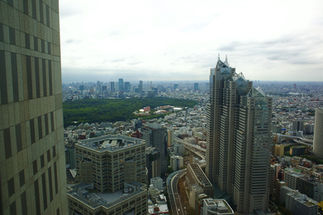
On our last day in Tokyo we started off with a brief walk around the Shinjuku Chuo garden before heading into the Tokyo Metropolitan Building for their free observation deck. There were two decks, a North and a South deck, both offering views across the city. A helpful greeter pointed us towards the less busy deck, and we jumped into the thankfully small queue for the elevator. Each deck had a cafe, and the one we visited was also equipped with a piano that visitors were welcome to play. Someone with foresight limited the playing time to 5 minutes per person - a rule much appreciated by us when the second, enthusiastic but perhaps misguided pianist took a seat on the bench. Beautifully and delicately played classics were replaced with a haltingly clunky performance that has since become the most prominent part of my memory of the place.


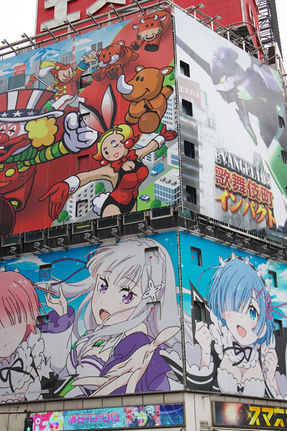
The rest of our day was spent wandering around Kabukicko, the part of Shinjuku that comes to mind when thinking of Toyko as a whole. There we found streets covered in billboards incessantly advertising to those down on the street below, restaurants with robot hosts, small bars and seedy host clubs. For those that are not familiar - on the face of it a host club seems like a place where lonely people can find companionship, the first visit often includes cheap drinks and various hosts who vie for your patronage... and you can only chose one of them. They then become your (contracted) friend, your confidant, your boyfriend (?) but in reality they just want your sweet sweet Yen. Your new friend will push you to buy buy buy, the drink prices go up and if you want his loyalty the money needs to keep flowing. He'll ring, he'll text, but in the end, his rank on the leaderboard is the most important thing - successful hosts retire before they're 30 after all.*
*All host club knowledge is theoretical and the result of strange internet rabbit-hole research.
During the day the streets were fairly quiet, most of the people we saw were harried corporate employees lining up at various popular restaurants for a quick bite to eat. At night however, this is where Tokyo's less savoury aspects can be easily found, but we weren't there for any of that. We were just interested in grabbing a photo of the area's most well-known landmark, the Godzilla head that looms over the main street from a hotel roof far above... that and exploring the area's many second hand camera shops in search for good deals on lenses.




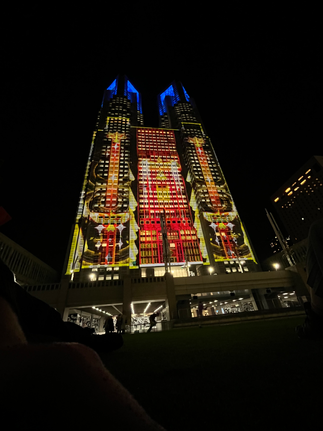
That evening, we made our way back to the Tokyo Metropolitan Building. This time our intentions were different; we weren't planning to ascend to the observation deck two hundred meters above us. Instead, we were excited to experience the projection show that illuminates the building's facade every night, a spectacle that draws both locals and tourists. We found ourselves a comfy spot laying on the meticulously maintained fake grass purpose-built as a viewing area. Soon enough, the show started. Most of it was conceptual: a way for production studios to showcase their skills on a larger scale - turning a simple grey building into a dynamic work of art. Each year, the projection theme varies. In previous years, many of the themes have been primarily focused on Godzilla, which we were a bit disappointed to have missed.




We ended our night by heading to Co-Co Ichibanya where Ben once again over estimated his tolerance for spice and spent the whole meal hiccuping while sweating.
.


Comments