


Ruta de las Flores
- georgiaphillips210
- Apr 28
- 8 min read
Trip date January 2026 1GBP = 1.32USD April 2026

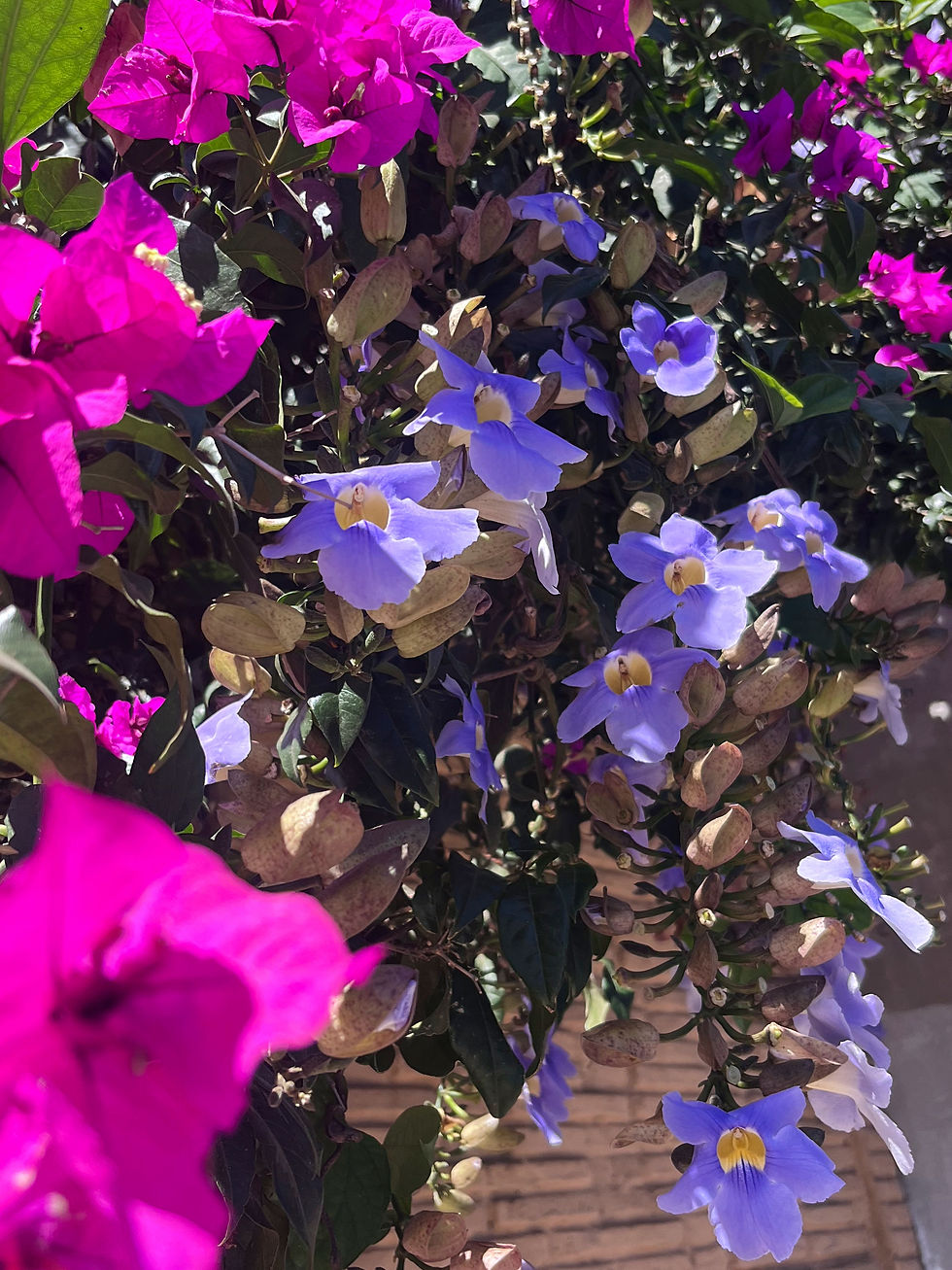
The "Ruta De Flores" (Flowers route) is a popular tourist area in El Salvador known for its small colonial towns hidden amongst coffee plantations in the county's highlands. Twice a year the flowers from which the route gets its name can be seen, with wild blooms framing the road from November to Feburary, and white coffee blossoms blanketing the hills in May. While the route can be explored as a day trip from the near-by-ish city of Santa Ana, we decided to stay on the route itself. We chose two towns to stay in, and as we'd just come across the border from Guatemala, we started in the northern most town: Conception De Ataco (Ataco for short).
We arrived in Ataco on New Year's Eve and let me tell you, it definitely wasn't where you'd want to go if you were looking for a party. Luckily for us we aren't party people as the town was absolutely dead. Not only was there not much of anything going on, except people ambling through the streets like we were, but most of the restaurants were shut too. There was however, plenty of market stalls selling overpriced import grapes... El Salvador follows Spain in the bizarre "twelve grape" tradition of trying not to choke while eating a grape for every stroke of the clock in the twelve second countdown to NYE. The grapes were not that delicious.


While strolling the quiet streets of Ataco one restaurant, with it's stark florescent glow streaming out into the dark night, caught our eye. "Pupuseria Roxy" didn't look like much but there was a never-ending queue of locals ordering takeaway from the aunties working the griddle in the open window, so we gave it a shot. A pupusa is a traditional El Salvadorian dish made from a corn or rice dough that is filled before being cooked on a grill or pan. We'd tried pupusa before in Guatemala, but they paled in comparison to the ones devoured here. The outside was crispy and a little doughy and the fillings were gooey and flavourful. To accompany the pupusa was a pickled slaw and a tangy light tomato salsa. The versions we had tried before came in two flavours, cheese or beans and cheese, here the flavours seemed endless - garlic, chicken, pork, squash, blackberry leaf and more. Best thing of all, the price ranged from $0.35 to $1 each.
The town livened up the next day, coffee shops and boutiques selling local artisanal goods opened their doors. Along with a stream of tourists came tourist wagons circling a worn route and street vendors shouting their wares in the town square. We wandered along the busy streets looking out for the street art that the town is known for, admiring the colonial architecture along the way. When we had enough of the town itself, we climbed up the hill to the "Mirador de la Cruz" to enjoy the view over the town and surrounding hills. The effort of our climb was slightly cheapened by one of the tourist wagons arriving there too, but who can blame them for wanting to appreciate the view without panting like we were.


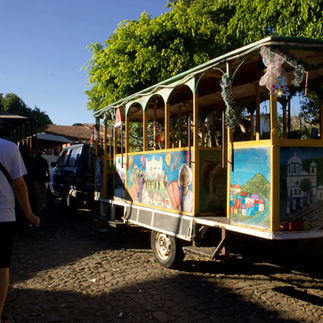

Ataco was nice enough: the food was great, the coffee shops were quirky, and it was a relaxing enough place to visit, but after two nights we were ready to head on.

Our next destination, Juayua, was a short 30 minutes by bus down the road. To get there, we headed to where we were dropped off on the main road just out side of Ataco to wait for the 249 bus. We didn't wait long, and unlike the bus that brought us to Ataco, this one had plenty of seats. When we arrived to Juayua the bus turned around in the entrance to the town before letting us off, from there we had a quick 20 minute walk to where we were staying.
Our first impressions of Juayua weren't that great. It was much larger than we had imagined and lacked the charm of Ataco. We also struggled to find somewhere that sold breakfast, the lack of cute cafes was apparent. The area directly near the main square was nice enough, with it's impressive white plastered church but I didn't really understand why it was the most popular town on the route. After wandering around the town to see if there was anything we'd missed, we decided to make use of the cheap and frequent buses and see what the rest of the towns on the route were like instead.

Salcoatitan, being the nearest town, was first on our list. While it had stunning viewpoints either side of the town, on a weekday there was nothing actually happening inside the town, so after 20 fruitless minutes trying to find a cafe to stop in, we left.


Nahuizalco was next. We hopped out of the bus on the main road passing the town to enjoy the expansive view over the coffee fields before climbing the steep hill into the town. This town was slightly more lively, but not by much. A few shops selling traditional wicker goods were open, but most cafes and restaurants were closed. If we had stayed to the evening, we could have caught the candlelit market they held each night - but honestly it seemed a little like it was only to draw in tourists, so we gave it a miss.


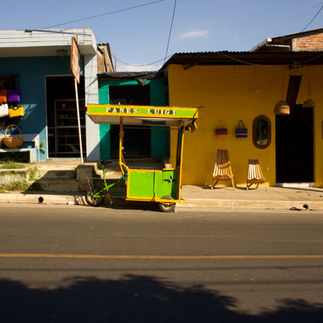


We left the town a different way, following a road on google maps that actually turned into a dirt track. By the time it had transitioned we'd already ascended quite a fair way, and not being ones to waste effort, we decided to plow on. The track, which got steeper and slipperier, had some beautiful viewpoints looking back over the town. Before we got too nervous, we made it to the top and rejoined the main road. It was just a matter of finding a sensible shady spot to flag the bus down from - no actual bus stop was needed... or available.

There were two main reasons we had decided on Juayua as our base; their weekend food festival and the 7 waterfalls hike. The food festival fell flat to me. I thought it would be different stalls offering different El Salvadorian dishes and street food but they all sold the same thing: BBQ'ed Steak, sausages, or prawns with salad, tortilla and rice. The prices weren't cheaper than the surrounding restaurants and I couldn't guarantee that the prawns wouldn't be cooked in meat juices, so we gave it a miss.
The 7 waterfall hike however, was all that I expected and a little more. We organised to join a tour with one of the hostels in town. It cost $15 each, and would last four to five hours depending how slow we were. We met up with our group and guide in town, luckily there was only eight of us, other groups we saw were larger. It started off easy, walking from town down into the valley, before passing through fields of coffee bushes and entering the jungle. Single file we traversed narrow paths, a steep drop on one side.
We eventually made our way down to the jungle floor, where we walked along a river to see our first waterfall. Here we noticed just how busy the route was, many groups with their guides waited around to grab their photos of the falls. Not quite the idylic trek we'd envisaged, but it was the weekend. The first three waterfalls were lovely, classic falls that we were just there to admire as we passed them by.


The fourth was a bit more of a challenge. I always knew that part of trekking the 7 waterfalls hike was to climb a waterfall - I just didn't realise how high we would actually be going or that we'd be doing it without gear. For the group in front of us, their guide climbed ahead anchoring a rope for them to use to climb up the cascades. I was dismayed to realise that our guide hadn't brought any such provisions - half of the group (including me) didn't even have helmets. Making matters worse, our guide only communicated in Spanish, making getting a reason or instruction that much more challenging.
With no way out but forward I had to get on with it. Preferring to get wet than fall I plastered myself to the rock face, each step up was a deliberation, my hands gripping each handhold as tight as I could. The climb up to the first shelf was easier than expected, but adrenalin still shook my legs making passing over the rushing water to the other side trickier.
The first part was the easiest part, next we had to shimmy up a crack in the rockface, slowly getting higher and higher. Eventually, we made it to the top, some 40 feet above the very hard looking riverbed. We'd done it! Every obstacle we faced past this point seemed simple. The thin paths with steep ledges no longer scary.
Our last waterfalls were man-made waterfalls. They also came with pools to swim in which (after our hot and sweaty walk) we were more than ready for. Being easily accessible from town the pools were filled with a mix of tourists and locals and, although it was busy, there was room enough for everyone to swim and play. Our guide (showing off) climbed up to one of the highest rocks that juts out from the waterfall, before jumping into the pool below - not something you'd catch me doing! We thoroughly enjoyed the hike; it was beautiful, challenging and I was left with a sense of satisfaction. I had pushed myself to do something and actually had fun along the way, it was without a doubt the best thing we did along the Ruta De Flores.


Not only was the hike the best thing we did, it was also the last thing we did as that night I got sick. I don't know if I accidentally ingested some bad water, or if one of the many delicious pupusa I ate betrayed me but I was sick as I had ever been, and would stay that way for a long while. So while we stayed in Juayua for another 3 nights, I could barely leave the bathroom let along see anymore of the area.
In all honesty I think we had allowed too much time for the Ruta de Flores. Although the internet gives each of the towns distinct characteristics and reasons to visit, I just didn't really get it. Apart from Ataco and Juayua, the towns we visited were sleepy little places with shut doors and a lack of things to do. They were each pretty in their own way but that's not enough in my opinion. I feel that either we came at a strange time of year, or just a few points of the route are actually set up for tourists and the tourism board is trying to leverage that to benefit the whole. It's not a bad thing, but apart from the hike I wouldn't go out of my way to visit if I was doing it again.
Perhaps if we had our own wheels we would have gotten more out of our stay. The area surrounding the route is mainly mountainous national parks, with waterfalls, walks and viewpoints abound... but they're really not accessible using only public transport. In the future, maybe the tourism infrastructure will realise the untapped potential of day trips exploring these areas... for now a scooter would have to do.


Comments